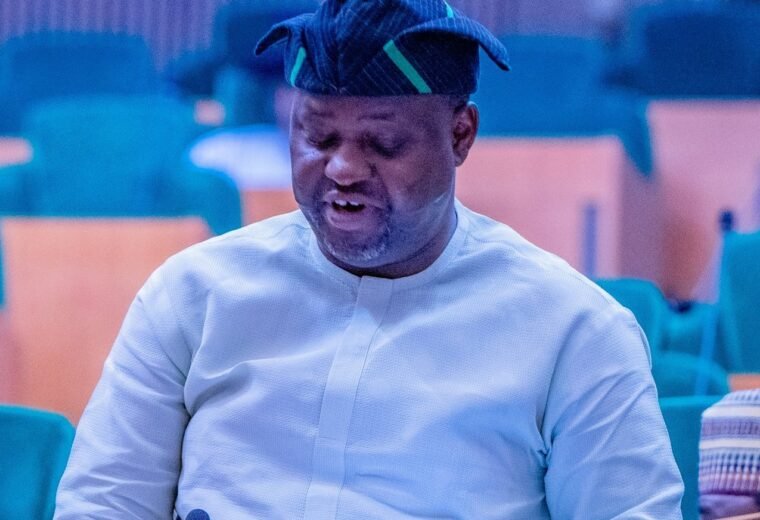
Fashola made the remarks during an interview with Channels Television presenter, Seun Okinbaloye, where he examined the economic implications of returning to fuel subsidy payments and questioned the feasibility of Atiku’s proposed alternative.
According to Fashola, all major presidential candidates in the last election had acknowledged the need to remove fuel subsidy because of the enormous financial burden it placed on the country.
“For credibility’s sake, all major candidates at the last election promised to remove this fuel subsidy. So what has changed? If something has changed, and as I said, I am entitled to change my mind, but I must come back to tell you: what was the compelling reason?” he said.
He acknowledged that Nigerians were experiencing the impact of subsidy removal but insisted that anyone proposing a reversal must explain how the government intends to finance the policy and sustain the financial commitments involved.
Fashola, who served in a government that operated the fuel subsidy regime, warned that returning to subsidy payments could deprive state governments of critical revenue, leaving them with limited resources and forcing some to borrow to meet salary obligations.
He argued that the country could return to a situation of reduced government revenue and financial pressure on states if the policy were reversed without a sustainable funding arrangement.
Questioning the practicality of Atiku’s proposal, Fashola called for detailed economic explanations, credible figures and clear implementation plans rather than broad political declarations.
“With the sketchy pronouncement that comes with it, I want to see rigor, I want to see detail, I want to see numbers,” he stated.
The former minister also challenged the assumption that locally operating refineries would automatically guarantee cheaper petrol for Nigerians.
He pointed to Nigeria’s existing crude oil production challenges, including production quotas, insecurity and pipeline vandalism, questioning where the additional crude oil required to support such an arrangement would come from.
Fashola further noted that Nigeria does not own all the crude oil produced within its territory, given the country’s joint venture arrangements and production-sharing contracts with international oil companies.
He therefore questioned the availability of sufficient crude oil at discounted prices, particularly when crude oil is traded internationally at prevailing global market benchmarks.
“What is our current oil production quota? Are we optimizing it yet? No, because there are legacy issues, challenges with security, vandalism and so on. So where is this magic crude oil going to come from?” he asked.
He maintained that proponents of the proposal must provide evidence to support their claims, allowing Nigerians to assess whether the policy is economically achievable.
According to him, making promises without addressing the country’s crude oil production limitations could create expectations that the government may eventually struggle to fulfil.
“People are entitled to ask; if he can explain, good, let people choose. But without proof, it’s like abracadabra,” Fashola added.
Emphasising that his criticism was directed at the policy rather than the individual behind it, the former Lagos governor said his intention was to encourage Nigerians to examine political proposals carefully and make informed electoral decisions.
“The proposal is not realistic. I’m not here to discuss personalities or talk about names. I am looking at the proposal,” he concluded.
Fashola’s comments have again brought the debate over fuel subsidy, domestic refining capacity and the economic consequences of subsidy reversal into focus, particularly as Nigerians continue to grapple with the effects of rising energy costs.
Credit: Interview conducted by Seun Okinbaloye of Channels Television.